
As a full-time caregiver for more than 18 years, I know firsthand the emotional wear that can quietly build over time. Anxiety has a way of settling into the background of daily life. Fatigue can weaken my defenses. Feelings of inadequacy can begin to whisper that I am not doing enough, even when I am giving everything I have. And depression, at least in my experience, does not always arrive dramatically. Sometimes it slips in like a jewel thief—quiet, subtle, and opportunistic—especially when I am physically exhausted and emotionally worn down.
That is one of the reasons the bike has meant so much to me. For me, cycling is not just exercise. It is a conduit to improved mood, renewed resilience, and a more stable mental outlook. It helps me reclaim a part of myself that caregiving, responsibility, and stress can sometimes push into the background. The ride reminds me that I am still moving forward, still capable, still connected to strength and possibility.
Cycling after 50 and your mental health is an essential topic that deserves attention.
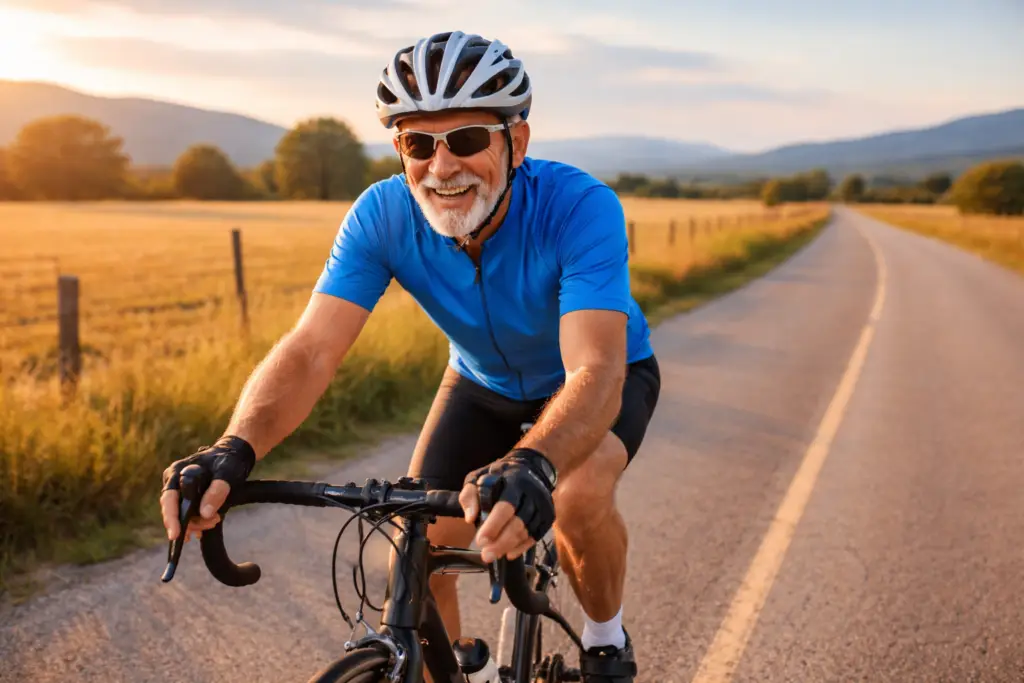
The Emotional Weight We Carry
As a full-time caregiver for more than 18 years, I know firsthand the emotional wear that can quietly build over time. Anxiety has a way of settling into the background of daily life. Fatigue can weaken your defenses. Feelings of inadequacy can begin to whisper that you are not doing enough, even when you are giving everything you have. And depression, at least in my experience, does not always arrive dramatically. Sometimes it slips in like a jewel thief—quiet, subtle, and opportunistic—especially when I am physically exhausted and emotionally worn down. So let’s talk about cycling after 50 and your mental health.
That is one of the reasons the bike has meant so much to me. For me, cycling is not just exercise. It is a conduit to improved mood, renewed resilience, and a more stable mental outlook. It helps me reclaim a part of myself that caregiving, responsibility, and stress can sometimes push into the background. The ride reminds me that I am still moving forward, still capable, still connected to strength and possibility.
Why Cycling Helps Quiet the Mind
One of the most immediate mental health benefits of cycling is stress reduction. A good ride pulls your attention out of the noise of daily life and places it into something physical and present. You begin to focus on cadence, breathing, posture, terrain, effort, and movement. The mental chatter that often accompanies stress starts to quiet down. For many riders, this shift happens within minutes.
From there, the body and mind begin to work together in a different way. Breathing becomes more rhythmic. Nervous tension eases. Thoughts that felt heavy or tangled often become more manageable. What seemed emotionally crowded before the ride can begin to open up. Cycling creates space, and sometimes that space is exactly what the mind needs.
For those of us who carry ongoing responsibility—whether as caregivers, spouses, parents, professionals, or simply people trying to stay upright through the strain of life—that space is not a luxury. It is essential. Regular cycling can become a reliable way to reduce accumulated stress, improve emotional steadiness, and rebuild mental resilience over time.
The Bike as a Source of Resilience
There is also something powerful about the forward motion of a bike. When I ride, I am reminded that movement itself can be healing. Even on difficult days, the simple act of getting on the bike and turning the pedals can shift my perspective. I may begin a ride feeling mentally burdened, but I often finish feeling clearer, calmer, and more capable of handling what is in front of me.
That is one of the gifts of regular cycling, especially as we grow older. It supports the body, yes, but it also strengthens the mind. It can restore confidence, improve outlook, and reconnect us with a sense of agency when life feels heavy. It gives us a way to care for our mental health through action.
At BicycleHigh, that idea matters. We believe cycling can help adults over 50 build not only physical vitality, but also emotional resilience and a stronger daily life. For me, the bike has become more than a fitness tool. It is part of how I stay steady. Part of how I keep going. Part of how I find my way back to myself.
A Question for You
Regarding Cycling after 50 and your Mental Health: How has regular cycling changed the way you feel, think, or handle stress?
References
Schuch, F. B., Vancampfort, D., Firth, J., Rosenbaum, S., Ward, P. B., Silva, E. S., Hallgren, M., Ponce De Leon, A., Dunn, A. L., Deslandes, A. C., Fleck, M. P., Carvalho, A. F., & Stubbs, B. (2018). Physical activity and incident depression: A meta-analysis of prospective cohort studies. American Journal of Psychiatry, 175(7), 631–648. https://doi.org/10.1176/appi.ajp.2018.17111194
Rebar, A. L., Stanton, R., Geard, D., Short, C., Duncan, M. J., & Vandelanotte, C. (2015). A meta-meta-analysis of the effect of physical activity on depression and anxiety in non-clinical adult populations. Health Psychology Review, 9(3), 366–378. https://doi.org/10.1080/17437199.2015.1022901
Josefsson, T., Lindwall, M., & Archer, T. (2014). Physical exercise intervention in depressive disorders: Meta-analysis and systematic review. Scandinavian Journal of Medicine & Science in Sports, 24(2), 259–272. https://doi.org/10.1111/sms.12050
Mammen, G., & Faulkner, G. (2013). Physical activity and the prevention of depression: A systematic review of prospective studies. American Journal of Preventive Medicine, 45(5), 649–657. https://doi.org/10.1016/j.amepre.2013.08.001
Leyland, L.-A., Spencer, B., Beale, N., Jones, T., van Reekum, C. M., & Cohen, D. L. (2019). The effect of cycling on cognitive function and well-being in older adults. PLOS ONE, 14(2), Article e0211779. https://doi.org/10.1371/journal.pone.0211779