
Nearly eighteen years ago, my wife suffered multiple cardiac arrests. Since that day, I have been her full-time caregiver. Those years have reshaped my understanding of endurance, resilience, and coping in ways no certification, seminar, or classroom ever could.
Cycling for Caregivers: A Path for finding space
Caregiving over the long haul changes you. It strips away a lot of illusion. It teaches you quickly that strength is not always dramatic. Most of the time, it is quiet. It is getting up again the next day. It is staying patient when your nerves are frayed. It is finding a way to remain steady when life has narrowed and the emotional demands do not let up. Engaging in cycling for caregivers provides a valuable outlet during these times.
Caring for a memory-impaired loved one requires more than responsibility. It demands patience, steadiness, and the ability to stay upright while absorbing blow after blow. You keep taking the punches and keep moving, trying not to get trapped in the corner. To be honest, I have slid into that corner more than once. I have taken that mental beating. I have felt the fatigue, the grief, the frustration, and the sense that the walls were closing in.
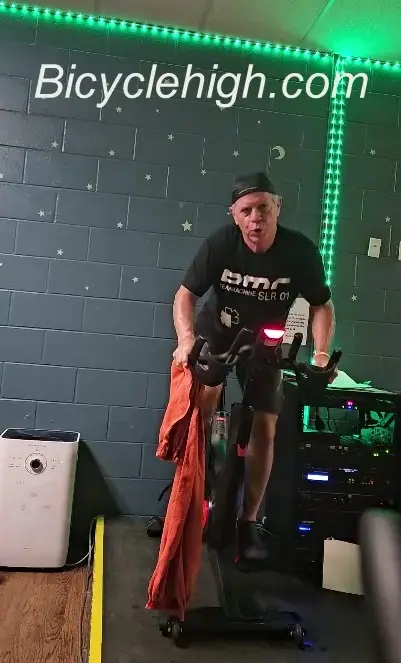
But even there, something important was being built.
It was not glamorous, and it was not easy. It was a kind of emotional durability shaped slowly through repetition, self-talk, and the daily decision to keep going. Not perfectly. Not heroically. Just faithfully.
In the early years, before moving here to Florida, it often felt like I was simply absorbing the blows. I was surviving, but not always with much sense of rhythm or release. Then, after moving to Florida, something small but meaningful happened. I bought an old Marin bike from a pawn shop not far from here. I put new tires on it, tuned it up, and got it rolling again.
That bicycle became more than a piece of equipment.
Riding was not really about escape. It was about remembrance. It reminded me that forward motion is still possible even when life changes in ways you never would have chosen. It reminded me that strength can be maintained even when so much else feels uncertain or out of control. It reminded me that motion itself can be restorative.
That is what BicycleHigh is really about.
It is not about performance. It is not about competition. It is not about chasing numbers, medals, or status. It is about durability. It is about staying mentally and physically engaged with life. It is about discovering that even in the middle of strain, there can still be rhythm, movement, and a measure of freedom.
Sometimes the win is not speed. Sometimes the win is simply refusing to stop.
That is the ride. That is the lesson. That is BicycleHigh. Ride stron Stay Capable Bpositive (like my Blood Type)
Join the Bicyclehigh Newsletter
“The experiences shared here are personal. The research below reflects what the science says about cycling, caregiving, and mental resilience.”
The effect of cycling on cognitive function and well-being in older adults / PubMed Central · University of Reading
Does cycle commuting reduce the risk of mental ill-health? An instrumental variable analysisI International Journal of Epidemiology · Oxford Academic, 2024
Exploring the causal effects of bicycling for transportation on mental healthTransportation Research Part D · ScienceDirect, 2021
Bicycling can sharpen your thinking and improve your mood Psychology Today Clinical
How cycling can improve your mental health Cycling UK Caregiver stress, burnout & the role of exercise
Effects of physical exercise in reducing caregiver burden: a systematic review Frontiers in Public Health · PubMed Central, 2025
Prevalence of depression, anxiety, burden, burnout, and stress in informal caregivers: an umbrella review ScienceDirect, 2025